

Be(com)ing griots
At WWLA, we have been intentional about taking on the identity of griots. This month has called us to reflect on the importance of being griots and celebrate our active and growing Griot community.

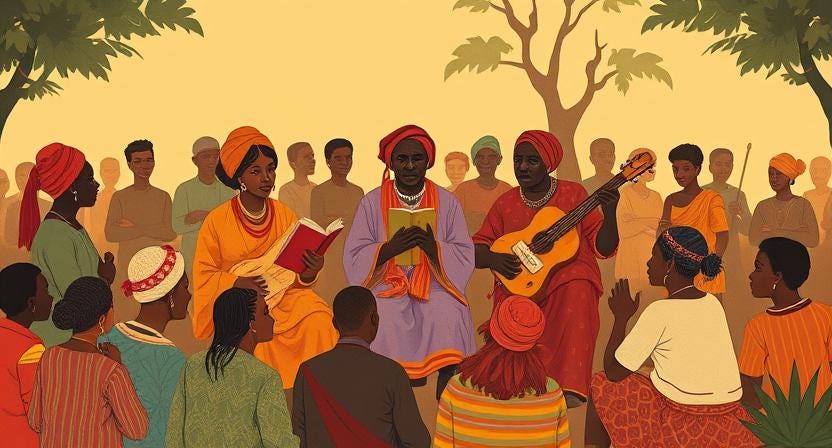
At We Will Lead Africa (WWLA), we have been intentional about taking on the identity of griots. When the three founders of WWLA first met in 2015, we connected over our shared dissatisfaction with the dominant narratives of despair about African leadership; and the lack of nuanced, documented examples of transformative leadership which we knew existed—each of us could point to role models in our immediate families/networks—and which we used in our separate and collective work.
From this flourished our mission to gather, document, and uplift stories of everyday African leaders in their own voice and words, to cultivate our own community of Griots. In the traditional African sense, griot (or djeli and other synonymous terms) means a knowledge keeper who passes on history, culture, and wisdom through oral traditions, artistic mediums, and ceremonial practices. We have expanded the term to include documenting our personal and collective written stories.
This month has called us to reflect on the importance of be(com)ing griots and to celebrate our active and growing WWLA Griot community.
Why we should all be griots
In a world that has often dehumanised African people, storytelling is a powerful way to reassert our humanity. Storytelling is deeply embedded in African culture—it has always been a technology for transformation. Through stories, we inspire, remember, teach, heal, connect, and galvanise for action. This is why we describe WWLA as a movement of people inspired to action on behalf of the collective.
Leadership is not about standing alone; it is about being part of something greater. And while the concept of leadership can sometimes feel distant or abstract, a personal story makes it real. It reminds us that leadership is not for an elite few. It is for anyone willing to act from where they are, with the agency they have.
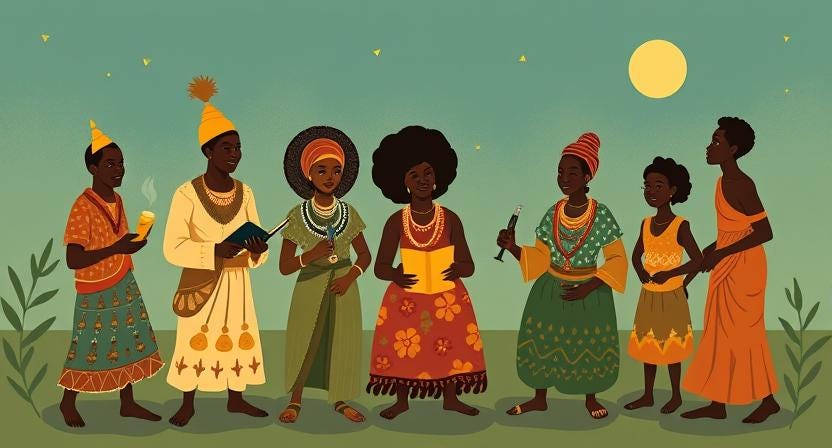
We don’t focus on personal stories because we believe in individualism or the hero narrative. We encourage leaders to write their stories because they reveal the connection between us and across the web of experiences that shape African leadership. For example, the personal narratives in our volumes have highlighted the interconnectedness of everyday African leadership challenges and triumphs, showing how individual leaders contribute to broader, system-wide transformation. They may be individual stories, but they link together to shape a collective narrative … one that is quite different from the dominant one frequently espoused.
For too long, Africa’s leadership stories have been shaped by external perspectives. The world has heard and repeated these limited (and limiting) narratives so often that they have become the dominant belief about African leadership—flattened, one-sided, and incomplete. At WWLA, we counter these narratives by uplifting the voices of everyday leaders who are driving real change and extraordinary impact. These stories do not erase the challenges, but they offer a fuller, more complex picture, one that includes resilience, innovation, and hope.
------------------------------
🔗 Read the full blog here: We are Griots.
Embracing griothood
It has been such a delight for us to see other everyday African leaders embrace griothood, sharing their personal leadership stories in service of collective knowledge and advancement. Whether through a WWLA volume, masterclass, or gathering, we have derived tremendous joy from having our call to action answered and real examples of successful African leadership recorded.
Equally joyful has been seeing members of our community exercise this role beyond the WWLA platform. Several past contributors have continually advocated for more African storytelling (particularly in leadership) with fervour and gusto akin to our own. What’s more: we have begun partnering with other African storytellers, guiding them to curate their own collections of African leadership narratives.
Today, we spotlight Volume One contributor Mimi Kalinda and our friends at Champs for Change.
🎧 In this episode of the Change Africa Podcast, Mimi Kalinda—a global communication specialist—delves into the importance of building authentic African narratives, the role of crisis management in collective action, and the need for government leaders to embrace storytelling as a strategic tool. Strap in and glean Mimi’s insights on the potential of narratives to produce transformational change across the continent.
🌐 Led by WNBA legend Clarisse Machanguana, Dr Memuna Williams, and Randy Soumahoro, Champs for Change (C4C) is a transformative social enterprise dedicated to empowering youth leaders across Africa to pursue careers in the sports industry. As their inaugural project, C4C has partnered with WWLA to develop the upcoming We Will Lead Africa: Sports volume, amplifying the voices of over 30 changemakers in African sports. Visit the C4C website to learn more.
Keeping griothood alive
Our mission at WWLA has and will always be gathering and uplifting the stories of everyday African leaders—in their own words and voices—and keeping the tradition of the griot alive. We invite everyone to take on this role, documenting and sharing African narratives to ensure that our wisdom, cultures, and traditions are never lost.
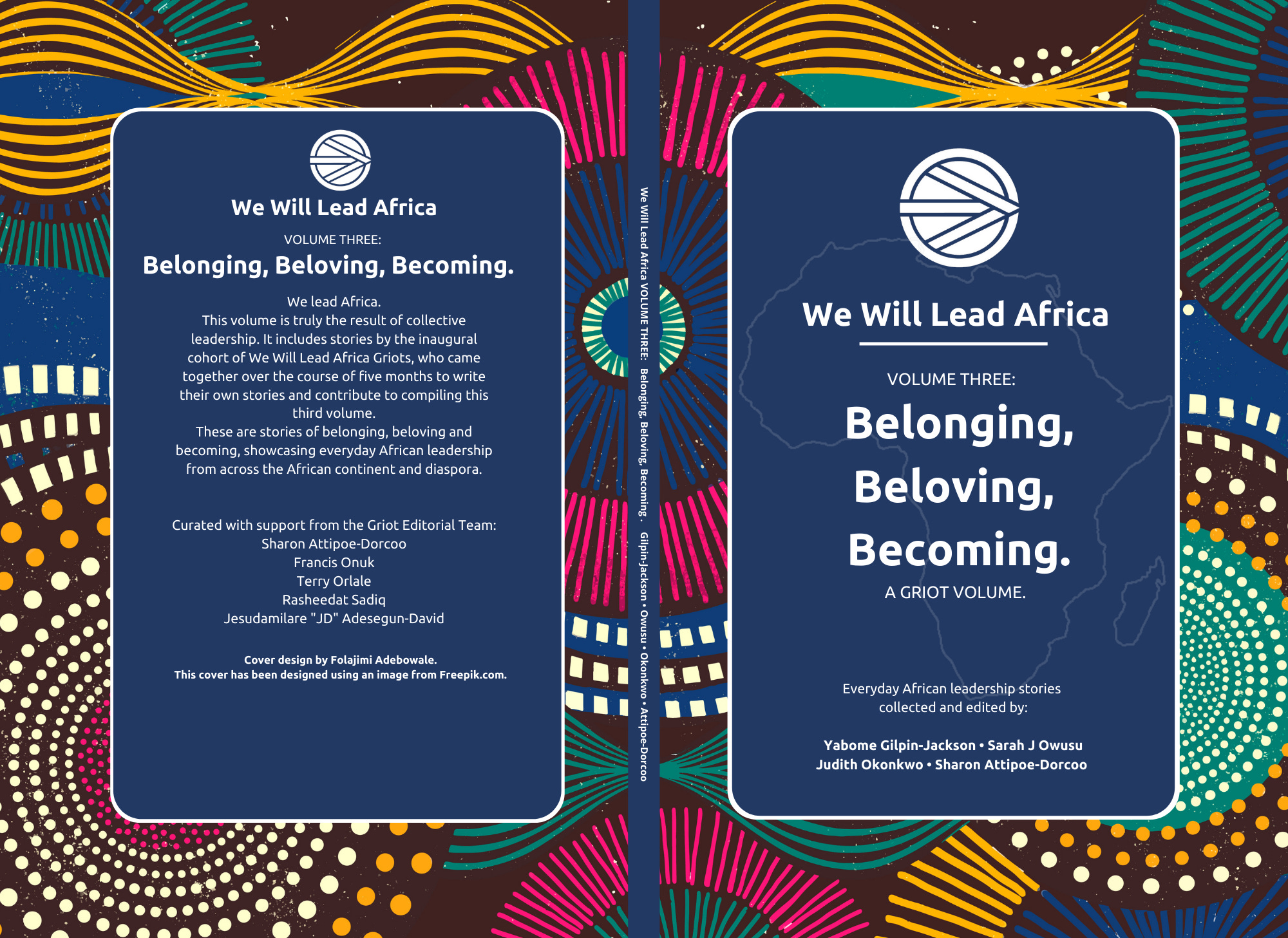
Whenever you need inspiration or find yourself in doubt, delve into the first WWLA Griot volume, Belonging, Beloving, Becoming. Curated out of the experience and writings of the inaugural WWLA Griot Masterclass series, this collection of 24 contributions and 11 oríkìs is sure to remind you exactly what makes our unique stories of perseverance and success worth amplifying and preserving.
If you would like us to feature your work in future editions, please contact us at submissions@wewillleadafrica.com.